
A Beginner-Friendly Overview of the AR15 Reset Assist Device Lineage
The Kabuto RAD, short for Reset Assist Device, is one of the newer designs in the AR15 trigger reset system space. It grew out of the earlier Kabuto TURD design, also known as the Trigger Usage Reset Device, and later evolved into the cleaner RAD and RAD v1.1 designs.
For people searching “Kabuto FRT,” “Kabuto RAD,” or “Kabuto reset assist device,” the terminology can get confusing fast. Some people call it a forced reset trigger. Others call it an active reset device, reset assist device, drop-in reset system, or super-safety-style mechanism.
The simplest way to describe it is this:
The Kabuto RAD is an AR15-platform reset assist system designed to interact with the fire control group and help create a more positive trigger reset during cycling.
It is not a pistol trigger shoe. It is not a Glock part. It is an AR-platform reset system built around the relationship between the bolt carrier group, selector area, and AR15 fire control group.
What Does “RAD” Mean?
RAD stands for:
Reset Assist Device
The name reflects the purpose of the design. The system is intended to assist trigger reset through mechanical interaction during cycling.
Earlier Kabuto designs were known under the TURD name, short for Trigger Usage Reset Device. The RAD name appears to represent a more refined, product-like evolution of the same general design family.
What Platform Is the Kabuto RAD Designed For?
The Kabuto RAD is associated with the AR15 platform and AR-style fire control groups.
That matters because the design depends on AR15 geometry, including:
- AR15 fire control group layout
- selector position
- bolt carrier movement
- lower receiver geometry
- trigger and hammer relationship
This is why Kabuto-style systems are usually discussed in AR15, AR9, AR22, and related AR-pattern contexts rather than handgun contexts.
What Are the Main Parts of a Kabuto RAD-Style System?
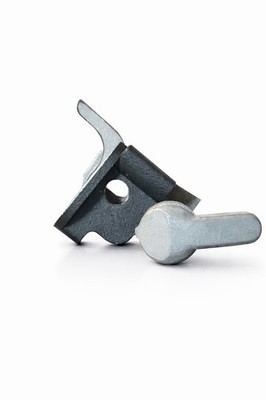
A typical RAD-style kit is generally built around four major components:
- Housing
- Lever
- Activator
- Selector
Each part plays a role in how the system fits into the fire control area and how reset assistance is transferred during cycling.
The exact names vary depending on who is discussing the design. Some sources use terms like cam, follower, trip, lever, activator, or safety lever. For clarity, Freedom Industrial Works uses the simpler four-part naming system above.
Kabuto TURD vs Kabuto RAD vs RAD v1.1
The early Kabuto TURD design helped prove the concept, but like many early open-design firearm accessories, it quickly became the subject of community remixes and refinements.
The RAD design simplified the concept.
The RAD v1.1 improved it further with updated geometry, improved fitment, revised housing design, and better pivot/contact behavior.
A simple breakdown:
- Kabuto TURD: early proof-of-concept design
- Kabuto RAD: simplified reset assist design
- Kabuto RAD v1.1: refined geometry and improved housing/fitment version
The v1.1 design is especially important because it addresses several of the issues people discussed with earlier versions, including fitment sensitivity, tuning, and binding concerns.
Why Did the Kabuto Design Evolve?
The Kabuto design evolved because real-world builders started finding the limits of the early versions.
Common discussion points included:
- tuning sensitivity
- printed housing strength
- selector fitment
- loose pin concerns
- tolerance differences between lowers
- bolt carrier interaction
- long-term durability
That is normal in an emerging design space. Early concepts prove the idea. Later versions refine the geometry, simplify assembly, and improve reliability.
That is exactly where RAD v1.1 fits into the lineage.
Why Stainless Steel Matters
Many early reset assist designs relied heavily on printed components because they were easy to prototype and distribute.
Printed parts can be useful for testing, but metal construction offers major advantages for serious use:
- better wear resistance
- stronger housing structure
- improved dimensional stability
- reduced flex
- cleaner long-term fitment
- better durability under repeated cycling
That is why Freedom Industrial Works is focusing on stainless steel RAD v1.1-style components, including stainless housings and stainless selector options.
The goal is not just to copy the shape. The goal is to make the system stronger, cleaner, and more consistent.
Why People Search for “Kabuto FRT”
People commonly search “Kabuto FRT” because the Kabuto/RAD design sits in the same broader conversation as forced reset triggers, super safety systems, active reset systems, and assisted reset devices.
The terminology online is messy.
Searches may include:
- Kabuto FRT
- Kabuto RAD
- Kabuto trigger
- Kabuto reset assist device
- Kabuto forced reset trigger
- Kabuto TURD
- RAD v1.1
- AR15 reset assist device
For SEO and clarity, “Kabuto RAD” and “Kabuto reset assist device” are probably the cleanest terms. “Kabuto FRT” is still worth mentioning because that is what many users type into Google.
Freedom Industrial Works RAD Direction
Freedom Industrial Works is developing two practical paths based on the Kabuto/RAD lineage.
The first is a lower-cost RAD 1.0-style system using laser-cut layered parts and printed housings. This gives builders a more affordable entry point.
The second is a premium all-stainless RAD v1.1-style system with stainless housing, stainless internal parts, and stainless selector options. This version is focused on durability, clean fitment, and reduced tuning compared to earlier designs.
That gives customers two options:
- affordable RAD-style entry system
- premium stainless RAD v1.1 performance system
Different users want different things. Some want the lowest-cost functional option. Others want the strongest and most refined version available.
Frequently Asked Questions
What is the Kabuto RAD?
The Kabuto RAD is a reset assist device associated with the AR15 platform. It evolved from earlier Kabuto reset device designs and is intended to assist trigger reset through mechanical interaction during cycling.
Is Kabuto RAD the same as Kabuto TURD?
They are part of the same design lineage, but RAD is the later and more refined naming/design direction. TURD was the earlier Trigger Usage Reset Device concept.
What is RAD v1.1?
RAD v1.1 is the improved version of the RAD design, featuring revised geometry, improved housing design, and better fitment characteristics compared to earlier versions.
What parts are in a RAD-style kit?
A RAD-style kit generally includes a housing, lever, activator, and selector.
Is this for Glock or pistols?
No. Kabuto RAD-style systems are AR-platform focused and should not be confused with pistol trigger shoes or Glock FRT-style products.
Final Thoughts
The Kabuto RAD design is best understood as an evolving AR15 reset assist system, not a single static product.
The original Kabuto concept proved the idea. Community feedback exposed areas that needed refinement. RAD simplified the layout. RAD v1.1 improved geometry, fitment, and housing design.
Freedom Industrial Works is continuing that evolution with affordable laser-cut options and premium stainless RAD v1.1-style systems designed around durability, precision, and practical performance.
Learn more at:
More technical articles: